

Assuming—purely theoretically, of course—a person were to wake up in the morning feeling like a zombie. Their limbs are heavy and stiff, and every movement causes pain. When they get up, they feel nauseous and dizzy, which will persist more or less throughout the entire day. They force themselves to exercise in the morning, take a cold shower, and eat breakfast. In fact, it was only the thought of a cup of coffee that got them out of bed at all.
They check the news. Nothing new. Except perhaps that the world is currently spinning even more wildly than usual. The globe is under quarantine. Everyone is helpless, looking for scapegoats. A fire is burning near the reactor ruins in Chernobyl. Apocalypse. Elon Musk is shooting hundreds of satellites into orbit. No UFOs, unfortunately. Trump is stirring up hostility toward immigrants. In Libya—where was that again? – —there is a civil war.
Enough information for the morning. Our – purely hypothetical – person thinks about what they want to do. Write. Psychoneuroimmunology. Self-esteem. Apparently, strong and stable self-esteem has a positive effect on the immune system. Not a bad idea during a pandemic. What actually is self-esteem?
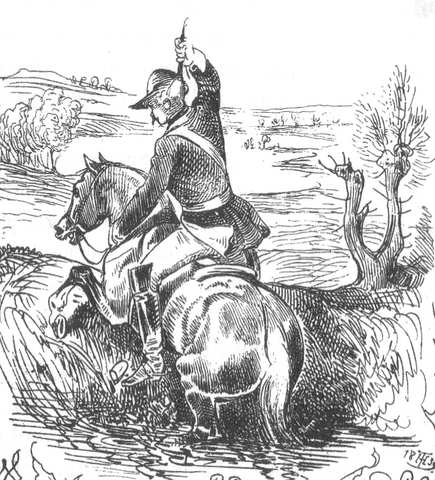
“Self-worth” is the value an individual attributes to themselves. Somehow, I have to think of Baron Münchhausen, who is said to have pulled himself out of a swamp by his own hair. What am I supposed to do if my genes predispose me to pessimism and I also grew up in—– what shall we call it? – “precarious” social circumstances? – If I am now sitting in the “swamp”? – Could I also think “self-valuing-feeling” (in rheomode)?
If my self-esteem depends on the self-image I carry within me, then my suffering makes perfect sense. If I am unconsciously convinced that human beings are bad and sinful at their core, then suffering is merely consistent, because it confirms the deep belief my parents implanted in me. That is the truly viral thing!
For centuries, people were controlled by instilling deep feelings of shame and guilt in them. As the power of the Church waned, the theory of psychoanalysis took its place. Essentially, human beings were said to be a wild, instinct-driven, antisocial, murderous “id” that had to be sublimated and cultivated—or rather – in practice – be thoroughly beaten into submission so that it would be “good.” That is real existing fascism!

Wilhelm Reich was initially a follower of Sigmund Freud, but he became independent early on and pursued his own path. “Orgastic potency” played a central role in his far too revolutionary thinking. Reich initially fled the Nazis to the United States. In the 1950s (!) his books were publicly burned there, and he died in prison shortly afterward. The 1968 movement drew on Reich’s work The Sexual Revolution. During the student riots in Paris, police officers were pelted with Reich’s books.
If Wilhelm Reich is right, then fascism is nothing other than hatred of life, or the human being’s “emotional plague.” This spiritual pestilence consists in suffocating emerging life wherever it appears, because otherwise it would remind those afflicted by the plague of their own unfulfilled desires and their fundamentally corrupted lives, causing fear and humiliation. Freedom must be prevented by every possible means for those afflicted by the plague! Showing pleasure and joy in life—that would surely be truly selfish and downright outrageous! In a world full of zombies, showing love and positive feelings becomes a revolutionary act!

Am I a victim? Or am I making a sacrifice? What must I do to give meaning to the seemingly endless suffering that life appears to entail? Does my suffering perhaps arise only through judgment? Am I therefore not entirely helplessly at its mercy? Perhaps Buddha is right when he says: 1. Life is suffering, 2. The roots of all suffering are the illusion of self, 3. Freedom from suffering is called Nirvana, and 4. The path to Nirvana is the practice of Buddhism.
Whatever “zap-bang-enlightened” or “Nirvana” means, it has to do with the absence of “I.” When I no longer know anything about myself, I am “sublated.” Then the illusion of time is also sublated. Indeed, both time and the self seem not to represent objective reality, but rather the result of quantized processes of consciousness. As long as the self generated by these processes does not suffer enough, this is not a problem either.
But if it suffers—purely theoretically, of course—then the question arises of what—zap-bang (!)—the “exit” from the psychological “lockdown” looks like. The reward cannot come only afterward; that would once again be merely a variant of Catholicism. If I stop judging—yes, if “I” stop existing—does my self-esteem then increase? Or does life feel more alive, so that afterward I arrive at the conclusion that this life, and therefore I myself, are worth living?
Perhaps I simply have to act “as if.” The pessimist with deficient self-esteem thinks: “Whatever I do, it makes no difference.” And they will be right. The glass really is half empty. The self-made optimist with strong and stable self-esteem, acquired through their own efforts, thinks: “Everything I do makes a difference.” And they, too, will be right. Because the glass really is half full! It is a decision, a resolution, and that requires courage. From today on, I will live as if everything I do had meaning—and then we will see what that does to me.
From a purely neurological perspective, it is quite clear that the formed self, with its well-myelinated neural pathways—the creature of habit that operates at the speed of a Formula One car (300 km/h)—is initially far more powerful than the “human being at the beginning,” who says: “Fuck it!” – The past has confirmed my pessimism to me again and again for decades. “If you expect nothing, it doesn’t hurt as much when you really get nothing.” – Until I realized that this way of living was making my life rot. So—from today on—moving at the neural conduction speed of a leisurely walker or flâneur (3 km/h), I will act “as if.”
This is the “Münchhausen Principle.” A long journey with many small steps and countless setbacks. Will it have been worth it? Will it have been “worth it”? What is the alternative? Do I go with Cain, who says, “To hell with everything!”—or do I go with Abel and make a sacrifice that pleases the “Lord,” life, or whoever else – the universe, the game master, the “old guy with the long beard”? That would be the path of a hero. That would be medicine for the human being’s spiritual pestilence, against the virus of external determination that endlessly and senselessly replicates itself. That would be the end of self-destruction; it would be a passionate and exciting life with self-worth, with a zest for play!
You can find more about the connection between self-esteem, optimism, and the immune system in Optimism Can Be Learned and Self-Efficacy, Stress, and the Immune System: What We Can Influence. You can find the complete overview in our comprehensive salutogenesis overview.
1 comment
Verflixt, die Blog Artikel sind sehr lesenswert. Gute Ansätze ….Danke für den Input. Über den Spieltrieb und das zu wenig spielerische in den meisten Biografien denke ich auch schon länger nach